The Technical Signals That Determine Whether Your Digital Art Gets Seen — Or Gets Buried
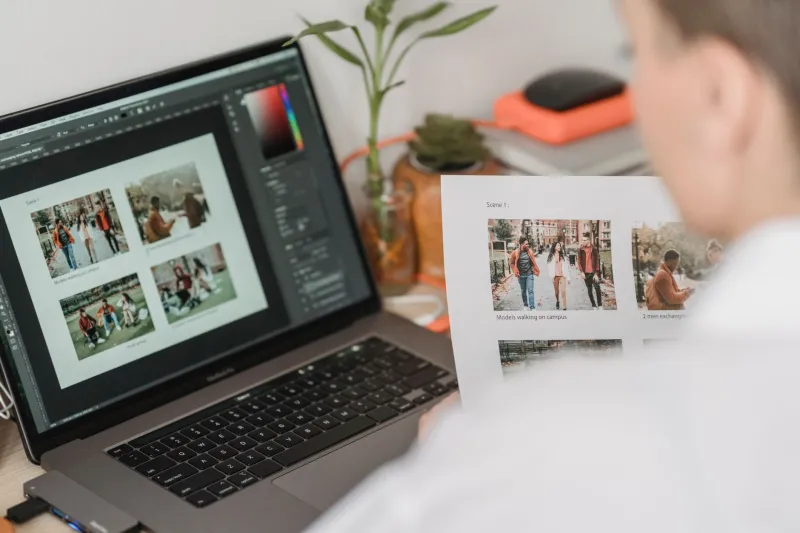
You've put serious hours into a piece. The composition is tight, the color story is exactly what you wanted, and the final render looks incredible on your calibrated monitor. You post it, add a few hashtags, and then... crickets. Meanwhile, someone else's work — objectively less polished — is racking up saves, shares, and client inquiries.
It's frustrating. But here's the thing: visibility in the digital art world isn't random, and it's not purely about quality either. There are technical signals happening behind the scenes — on platforms, in search engines, and across portfolio sites — that are quietly deciding who gets seen and who doesn't. Understanding those signals is one of the most practical things you can do for your creative career right now.
What "Technical Signals" Actually Means
When we talk about technical signals in this context, we're not getting into hardcore developer territory. Think of them as the data points that algorithms and search engines collect to decide how relevant and trustworthy your content is. For digital artists, these signals show up in a few key places: your portfolio website, your social media posts, the image files themselves, and how other people interact with your work online.
Ignoring these signals doesn't make them go away — it just means someone else is benefiting from them while you're not.
File Naming: The Overlooked Starting Point
This one sounds almost too simple, but it matters more than most artists realize. When you export a piece and name it something like final_v3_REAL_USE_THIS.jpg, you're essentially invisible to search engines. Google, Bing, and even Pinterest's internal search use file names as one of the earliest signals to understand what an image contains.
Rename your files descriptively before uploading. Something like neon-cyberpunk-cityscape-digital-illustration.jpg tells search engines exactly what they're looking at. It's a small habit that compounds over time, especially as you build out a portfolio with dozens or hundreds of pieces.
Alt Text Isn't Optional Anymore
Alt text was originally designed for accessibility — it describes images for people using screen readers. But it's also one of the clearest signals you can send to search engines about what your image contains. If your portfolio site or blog posts are missing alt text on your artwork, you're leaving real visibility on the table.
Write alt text like you're describing the piece to someone who can't see it. Be specific: the subject, the style, the mood, the medium. "A digital painting of a fox sitting in a misty forest at dawn, rendered in a soft painterly style" is infinitely more useful than "my latest piece" — both for search engines and for the humans who benefit from accessibility features.
Page Load Speed Is a Ranking Factor — Even for Art Sites
This one trips up a lot of digital artists who are rightfully obsessed with image quality. You want your work to look its absolute best, which often means large, high-resolution files. But if your portfolio site takes six seconds to load because every image is a massive uncompressed PNG, search engines will penalize your rankings and visitors will bounce before they even see your work.
The fix is compression without visible quality loss. Tools like Squoosh, TinyPNG, or built-in export settings in Photoshop and Procreate can dramatically reduce file size while keeping the visual quality you worked hard for. Aim for the sweet spot — usually under 500KB for most web-displayed images — and use modern formats like WebP where your site supports it.
Metadata and EXIF Data: Hidden Signals in Your Files
Every image file carries metadata — information embedded in the file itself that describes things like the camera or software used, the date created, and sometimes GPS data. For digital artists, the software metadata (showing your work was created in Adobe Photoshop, Procreate, Clip Studio, etc.) can actually serve as a legitimacy signal on some platforms.
But more importantly, you can embed descriptive metadata — including titles, keywords, and copyright information — directly into your image files before you upload them anywhere. This is especially relevant if you're submitting to stock art platforms, art licensing marketplaces, or anywhere your work might be discovered and reused. Programs like Adobe Bridge, Lightroom, or even free tools like ExifTool let you edit this data.
Engagement Velocity Matters More Than Total Engagement
On social platforms — Instagram, TikTok, Pinterest, even Behance — algorithms pay close attention to how quickly a post generates engagement after it goes live. A piece that gets 50 saves in the first hour sends a much stronger signal than one that slowly accumulates 200 saves over two weeks.
This is why posting time matters, why your caption and first comment can influence discoverability, and why some artists seed initial engagement by sharing to Stories or other channels right after posting. It's not about gaming the system dishonestly — it's about understanding that the algorithm reads early momentum as a signal of quality and relevance.
Backlinks to Your Portfolio Still Work
Search engine optimization for artists isn't dead — it's just underutilized. One of the strongest signals Google uses to rank any website is how many other credible sites link to it. For digital artists, this means that getting your work featured on art blogs, being listed in curated directories, contributing guest posts to creative publications, or even having your work shared by other creators with their own websites can meaningfully boost how often your portfolio shows up in search results.
You don't need hundreds of backlinks. A handful of genuine, relevant links from real creative communities can make a measurable difference — especially if you're working in a specific niche where competition is lower.
Consistency Signals Credibility
Finally, there's one technical signal that's easy to overlook because it unfolds slowly: consistency. Algorithms on every major platform interpret regular, predictable posting as a signal of a credible, active creator. It's not just about showing up for your audience — it's about telling the platform's algorithm that you're a reliable source of content worth distributing.
This doesn't mean you need to post every single day. It means establishing a rhythm — even if that's twice a week — and sticking to it long enough for the algorithm to trust you.
The Bottom Line
Talent gets you in the room. Technical signals keep the door open. The artists who are consistently building visibility aren't necessarily the most skilled — they're the ones who've learned that the creative work and the strategic work have to happen together. Start with one or two of these signals, build the habits, and watch how the landscape shifts over time.
Your art deserves to be seen. Give it every possible advantage.